Where modern australian jazz
found its voice
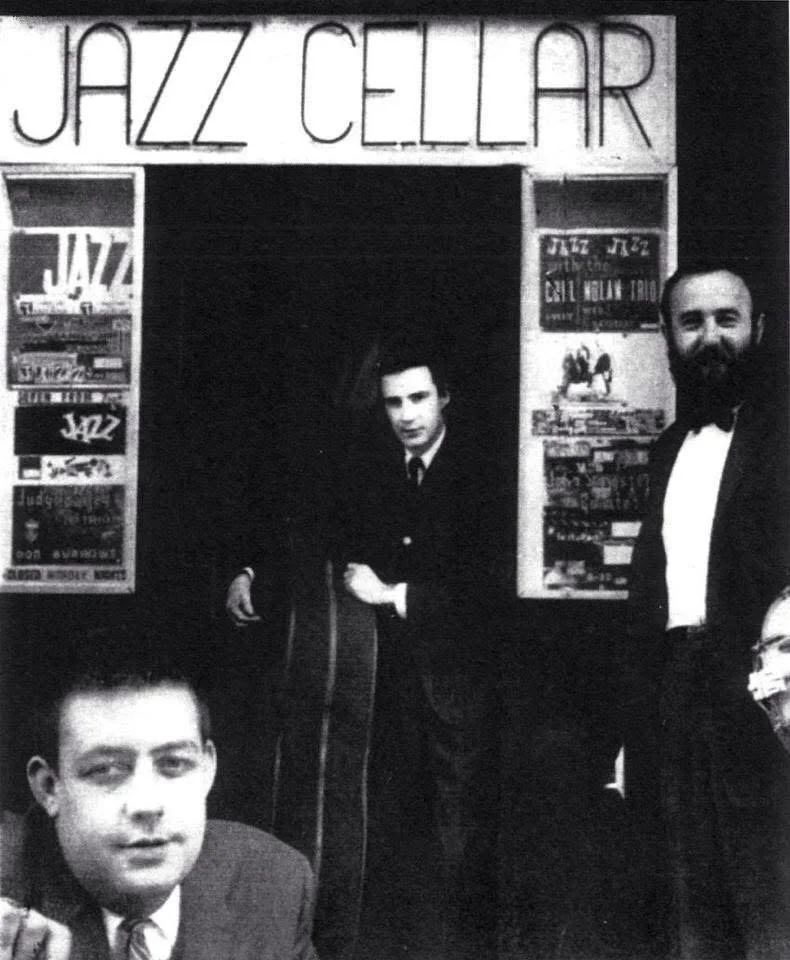
From Jazz Cellar to Sydney IconA little piece of Sydney history
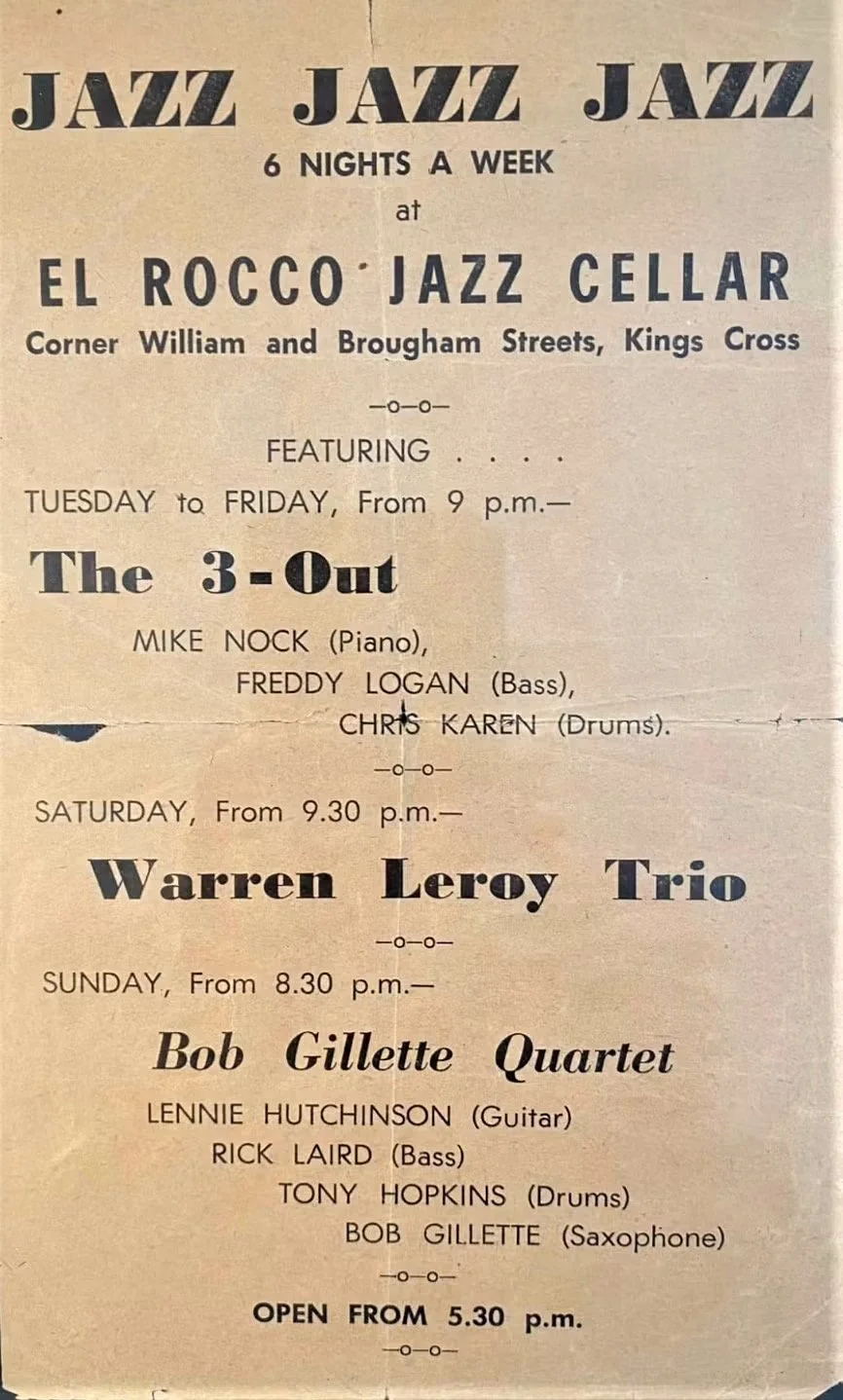
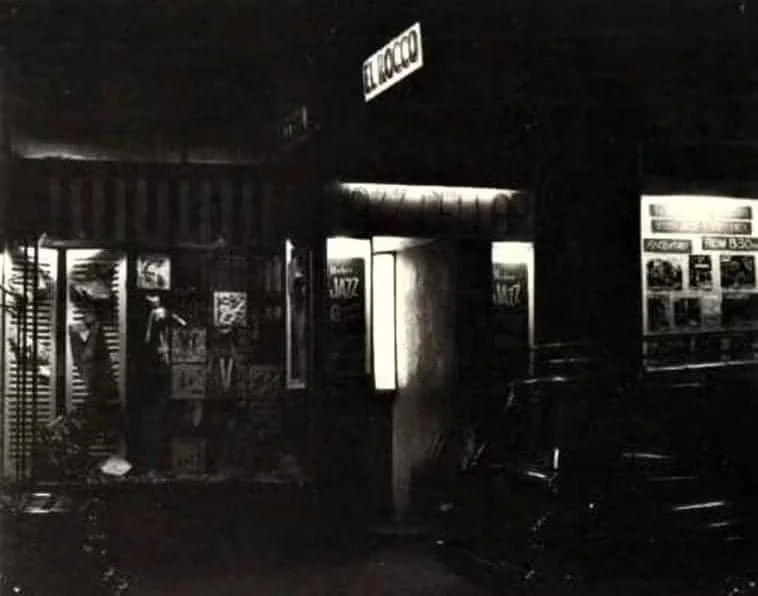
The El Rocco story began here in Brougham Street in 1955, on the edge of a Kings Cross alive with artists, writers, musicians and night owls.
The original El Rocco was created in a basement beneath the building, but the space first had to be enlarged by quarrying out several tons of sandstone. The back-breaking work left such an impression on those involved that, when it came time to name the new coffee lounge, The Rock seemed an obvious choice. With a touch of humour, and perhaps a playful send-up of the bohemian fondness for exotic names, they chose El Rocco instead.
For its first couple of years, El Rocco was simply a coffee lounge serving food and coffee to the art students, writers, musicians and assorted characters who lived in or drifted through the Cross.
Then jazz arrived almost by accident.
In 1957, manager Arthur James installed a television to attract customers at a time when TV was still a novelty in Australian homes. Broadcasting finished early in those days and, at around 10pm, the screen would fall silent
Drummer Ralph Stock saw an opportunity and suggested filling the rest of Sunday night with live jazz.
In October 1957, the Ken Morrow Quartet began playing Sunday nights at El Rocco.
The idea took off.
Within two years, El Rocco had become one of the most important homes of modern jazz in Australia.
By 1959 it was presenting jazz five nights a week, sometimes to crowds so large that the queue climbed out of the cellar, along Brougham Street, into William Street and up towards Darlinghurst Road.
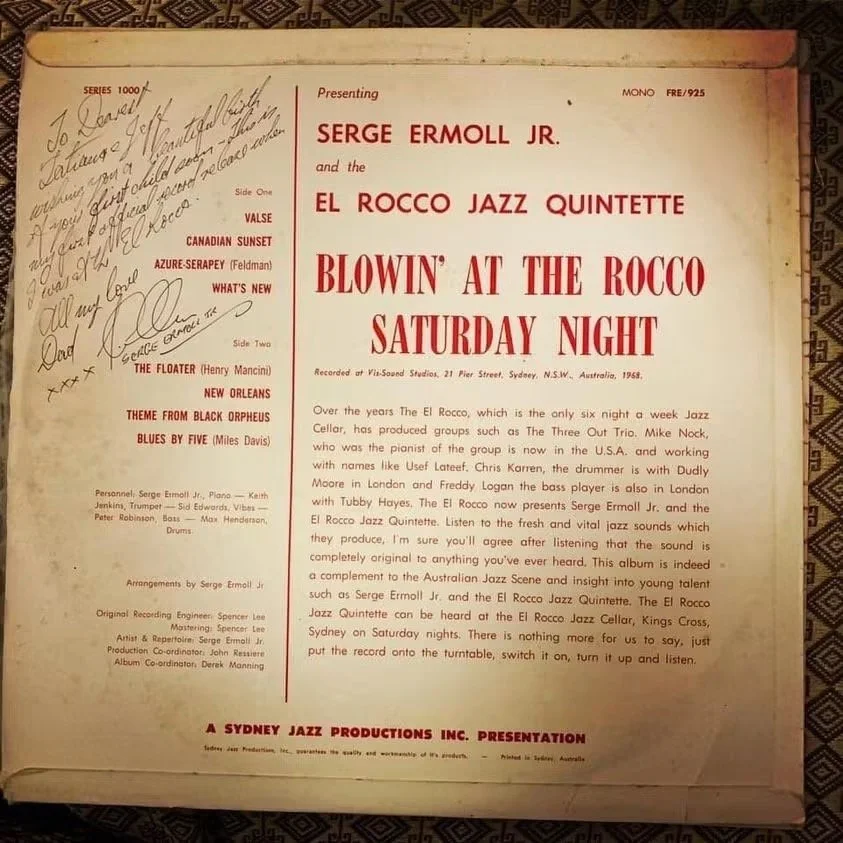
El Rocco became both a meeting place and a proving ground for Australian musicians. Don Burrows, Mike Nock, Bernie McGann, John Pochée, Judy Bailey, George Golla, Col Nolan, Bryce Rohde and many others played there. It was a place where musicians were encouraged to experiment, and it became the first Sydney venue to feature free jazz and jazz performed alongside poetry.
Its influence was profound. El Rocco is often regarded as the birthplace of modern Australian jazz, a place where a generation of musicians began developing a distinctive Australian voice rather than simply reproducing the sounds arriving from overseas.
Its reputation soon travelled far beyond Kings Cross.
Nancy Wilson sang duets with Lou Rawls there. Dizzy Gillespie was photographed playing in the cellar, while Milt Jackson, Dave Brubeck and his quartet, Carmen McRae, Percy Heath, Gene McDaniels and other international musicians visited and, in many cases, sat in with the local players. In August 1962, American jazz magazine DownBeat featured El Rocco and its remarkable musical atmosphere.
Other chapters of the venue’s history have added still more famous names. Later histories of El Rocco record Frank Sinatra and Sarah Vaughan among the international stars who graced its stage.
And the musical tradition did not disappear with the original jazz era. Decades later, El Rocco continued to attract musicians. Rai Thistlethwayte of Thirsty Merc was jamming with the house band here, while Angus Stone is among the more recent Australian musicians remembered as having dropped in to jam.
What made the original El Rocco particularly unusual was that, for almost all of its life as a jazz coffee lounge, it had no liquor licence.
The music itself was the attraction.
Arthur James later remembered audiences packed together in the little cellar like sardines, yet so attentive that “you could hear a pin drop.”
Just as importantly, James was prepared to give young and unknown musicians somewhere to test themselves.
He did not insist that every night make money, allowing less commercial and more experimental performers to share the program with musicians who could fill the room. For a generation of players, El Rocco became somewhere to learn, experiment and push Australian jazz forward.
By the late 1960s, Sydney was changing. Larger clubs were offering musicians more money, television work had expanded, and new fire and noise regulations made running the cellar increasingly difficult.
Arthur James chose not to undertake the alterations required for a liquor licence and, in 1969, the original El Rocco jazz cellar quietly closed.
Its influence proved much harder to close.
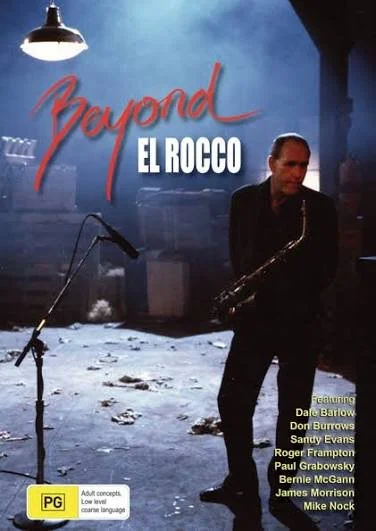
In 1990, the story lent its name to the feature documentary Beyond El Rocco, directed by Kevin Lucas.
The film traced the evolution of Australian modern jazz from the bohemian coffee lounges and subterranean clubs of the 1950s through the decades that followed, bringing together performances and interviews with more than 70 musicians, including Don Burrows, Bernie McGann, Paul Grabowsky and James Morrison.
The title itself speaks to El Rocco’s place in that history. What began in a tiny sandstone cellar in Kings Cross became part of the story of modern jazz across Australia.
More than seventy years after the El Rocco name first appeared on Brougham Street, music and hospitality remain part of this remarkable little corner of Sydney.
Today, Pizza El Rocco carries the name forward from its own separate space upstairs, while the historic El Rocco basement forms part of Bar El Rocco next door.
Different spaces, connected by the El Rocco name and by more than seventy years of Sydney cultural history.